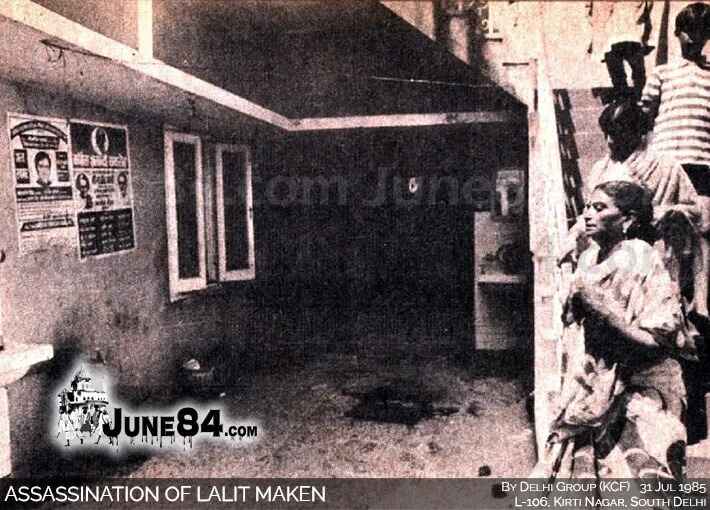
Lalit Maken was one of the most promising young leaders in the Indian National Congress during the early 1980s. Admired for his charisma, leadership qualities, and his connection with the youth, he was seen as a politician destined for greater responsibilities. Sadly, his journey was cut short when Lalit Maken was assassinated in 1985. His killing not only shocked the country but also revealed the turbulent political environment following the 1984 anti-Sikh riots.
Early Years and Personal Background
Coming from a politically active family, Lalit Maken was deeply influenced by public life from an early age. Growing up in Delhi, he developed a keen interest in governance and leadership. His entry into politics was supported by Congress party veterans, and he quickly gained recognition for his approachable personality and progressive ideas. For many, he symbolized the new generation of leaders ready to transform Indian politics.
Rise within the Congress Party
In a short span of time, Lalit Maken made his mark in the Indian National Congress. He focused on issues that resonated with young Indians, motivating them to participate in public affairs. Known for his communication skills and organizational strength, he became an influential figure in the party. His reputation as a fresh, energetic leader made him a rising star, but it also placed him in the spotlight during one of India’s most challenging political chapters.
The Shadow of the 1984 Riots
To fully understand the significance of Lalit Maken assassinated, it is essential to revisit the violent backdrop of the 1984 anti-Sikh riots. After Prime Minister Indira Gandhi’s assassination, widespread violence erupted, leaving thousands dead. Several Congress members were accused of being involved in or ignoring the atrocities. Lalit Maken’s name was also mentioned in some reports, though the debates over his role remain unresolved. This atmosphere of anger and mistrust created lasting enmities, which eventually made him a target.
Lalit Maken Assassinated in 1985
On July 31, 1985, Lalit Maken was gunned down outside his residence in Delhi. The attack was carried out by armed assailants, and his wife, Geetanjali, tragically lost her life in the incident as well. Geetanjali was the daughter of Shankar Dayal Sharma, who later became the President of India. Investigations indicated that Sikh militants were behind the attack, motivated by resentment linked to the 1984 riots. Lalit Maken assassination highlighted the volatile climate of the time, where political violence became a tragic reality.
Aftermath and Investigations
The murder of Lalit Maken prompted immediate investigations, and security agencies connected the crime to extremist groups. Some of the accused fled abroad, which complicated the legal processes. For many observers, the incident showed how fragile the security framework was for public leaders during those years. It also brought into focus the deep wounds left by the riots, which continued to fuel violence and revenge-driven actions.
Impact on the Congress Party
Lalit Maken’s death was a massive setback for the Congress party. Losing a young, energetic leader with immense potential left the party grieving. His absence created a void in leadership, particularly among youth-focused initiatives. The assassination further polarized the political landscape, as debates over the riots and demands for justice remained at the center of national discussions. Within the Congress, his murder was seen as a tragic reminder of the heavy costs leaders had to pay during such unstable times.
The Family’s Political Legacy
Lalit Maken’s personal life was also marked by political ties. His wife Geetanjali, who perished alongside him, came from an influential family. Their daughter, Avantika Maken, later stepped into the political sphere, continuing the family’s public legacy. The assassination is remembered not just as a political loss but also as a devastating personal tragedy for a family that had devoted itself to serving the nation.
How Lalit Maken Assassinated Influenced Indian Politics
The killing of Lalit Maken is often seen as a reflection of the intense political unrest in India during the mid-1980s. His death served as a stark reminder of how unresolved communal tensions could erupt into violence. Historians often note that his assassination symbolized the broader instability of the time, where young leaders became collateral in larger conflicts. It remains a key event in understanding how violence shaped political strategies and community relations during that decade.
Honoring Lalit Maken’s Memory
Decades after his death, Lalit Maken continues to be remembered by his supporters and historians. Many view his life as an example of unfulfilled potential—a leader whose contributions were cut short before reaching their full impact. Articles, memorials, and discussions about his role still surface, keeping his memory alive. For younger generations, his story is both inspirational and cautionary, underscoring the importance of communal harmony and justice in a democracy.
Conclusion: A Career Cut Short
The story of Lalit Maken reflects the uncertainty and turbulence of Indian politics in the 1980s. From being a rising Congress leader to becoming a victim of assassination, his life illustrates the dangers of political rivalries and communal discord. His killing left behind lessons about unity, justice, and the risks leaders face when society is divided. Remembering Lalit Maken today helps us reflect on the fragile nature of political stability and the importance of building a future free from the shadows of violence.